
Ashes of the Singularity II Turinium Victory Explained
How the Turinium win condition works in Ashes of the Singularity II, how to hold generators and how to stop an opponent who is ticking toward victory.
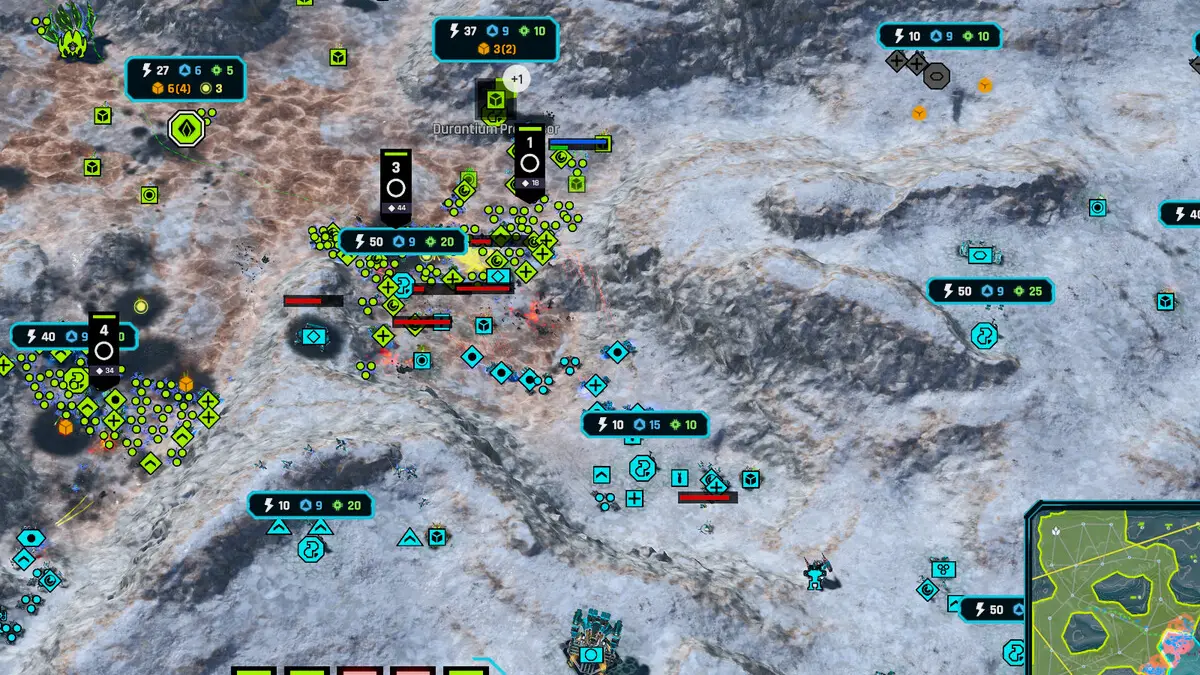
Ashes of the Singularity II has a second win condition beyond destroying the enemy: Turinium. You hold generators, you accumulate points and you win when the counter fills. It is the mechanic that stops every match from becoming a two-hour turtle war, and it is the reason map control matters even when neither army can break the other.
The official developer blog confirms that Turinium victory returns from the first game. Generator positions and the victory timer are configurable in custom games, so the pace of a match is partly a lobby decision.
This guide reflects the November 10, 2026 launch build. Re-check key numbers after each patch.
How the win condition works
A Turinium generator is a capturable structure. When you control one, it generates victory points over time. The first player or team to reach the configured threshold wins, regardless of how many units remain on the map.
The important details:
- Generators are on the map, not in your base. You have to leave home to win.
- Control is contestable. An enemy army standing on the generator can flip it back.
- The victory timer is a lobby setting. Short timers reward early aggression; long timers reward economy.
- Generator positions can be customized, so a custom map can put them in the center or in a corner.
Because the generator is a physical location, a Turinium game becomes a siege. You are not trying to kill every enemy unit; you are trying to make one piece of ground uninhabitable for the enemy army.
The three phases of a Turinium game
Phase 1: economy. The first ten minutes look like a normal game. Take regions, build extractors, get production online. The player who skips economy to rush the generator usually loses the generator to a counter-push.
Phase 2: the first contest. Once you have a army that can survive a fight, push toward the generator. You do not need to hold it permanently. You need to force the enemy to fight on your terms and to make them spend units retaking it.
Phase 3: the lockdown. When you are ahead, the goal is to make the generator area a kill zone. Turrets, anti-air, artillery and a mobile reserve. The enemy has to come to you, and every attack they lose is a minute closer to your victory.
How to hold a generator
Holding a generator is not the same as standing on it. A single army on the point is a target; a defended position is a win condition.
- Build turrets around the approach, not on the point itself.
- Keep anti-air behind the position. Aircraft are the fastest way to break a generator camp.
- Put artillery in range of the point so the enemy cannot stand on it.
- Keep a mobile reserve to react to a flank.
- Do not overbuild. Every turret is a unit you did not build.
The best generator defense is a layered one: turrets to slow the enemy, artillery to damage the army, a mobile force to counterattack. A pure turret wall loses to artillery; a pure army loses to attrition.
How to break a generator camp
If the enemy is ticking toward victory, you cannot wait. You need to break the position before the counter fills. The options, in order of reliability:
- Cut the economy. Raid extractors and refineries. A generator camp with no income cannot replace losses.
- Force a split. Attack a different region. If the enemy responds, the generator is weaker; if they do not, you take their economy.
- Break the air defense. If they have no anti-air, aircraft can hit the artillery and turrets for free.
- Super units. A Hyperion or Eye of Darkness can break a static position, but only if you already have the economy to build one.
The worst option is a frontal attack into a prepared position with the same army that just lost there. If you lose the first attack, change the angle or change the target.
Turinium in multiplayer
In team games, Turinium becomes a coordination problem. One player can hold the generator while the others raid, or the team can commit to a single decisive fight. The 8-player mode with up to 10,000 units makes generator fights chaotic; the team that keeps its artillery alive usually wins.
The launch community reports that many games end by destruction before the Turinium counter fills. That does not make the win condition irrelevant. It means the threat of Turinium forces action, which is exactly what it is designed to do.
Should you enable Turinium?
For 1v1, a medium timer is a good default: long enough for an economy game, short enough that a turtle cannot stalemate forever. For large team games, a longer timer gives the team fight time to develop. For custom scenarios, short timers create a king-of-the-hill mode.
If you are learning the game, leave the default on. It teaches you to fight over ground instead of building a perfect base.
For the next step, read Ashes of the Singularity II Economy Guide→.
FAQ
How long does a Turinium victory take? It depends on the lobby setting. Generator positions and the victory timer are configurable, so a short game can be 15 minutes and a long one over an hour.
Can I win without destroying the enemy? Yes. Holding Turinium generators long enough wins the match.
How do I stop a Turinium win? Cut the enemy economy, force them to split and attack the generator position from multiple angles. Do not feed the same army into the same defense twice.
Sources
Official source: Turinium victory developer blog ↗
Keep reading
Related Guides
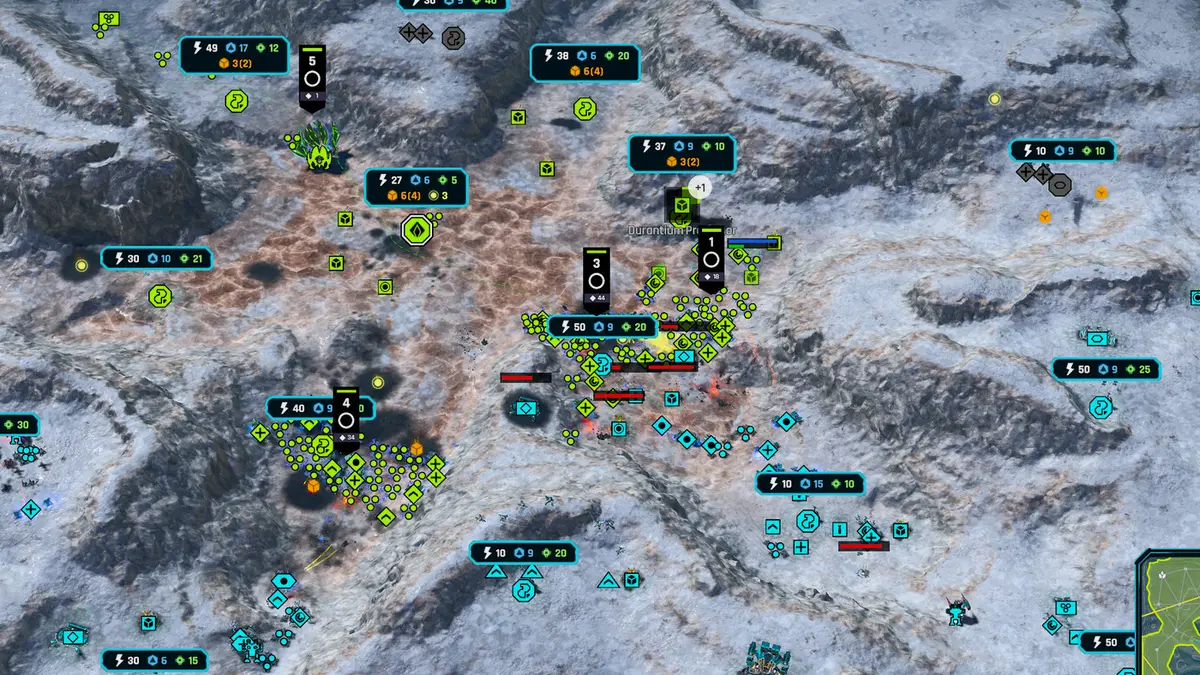
Ashes of the Singularity II Economy Guide
Durantium, Elerite and Quanta explained: extractors, refineries, region Power and the economic opening that beats a bigger army.
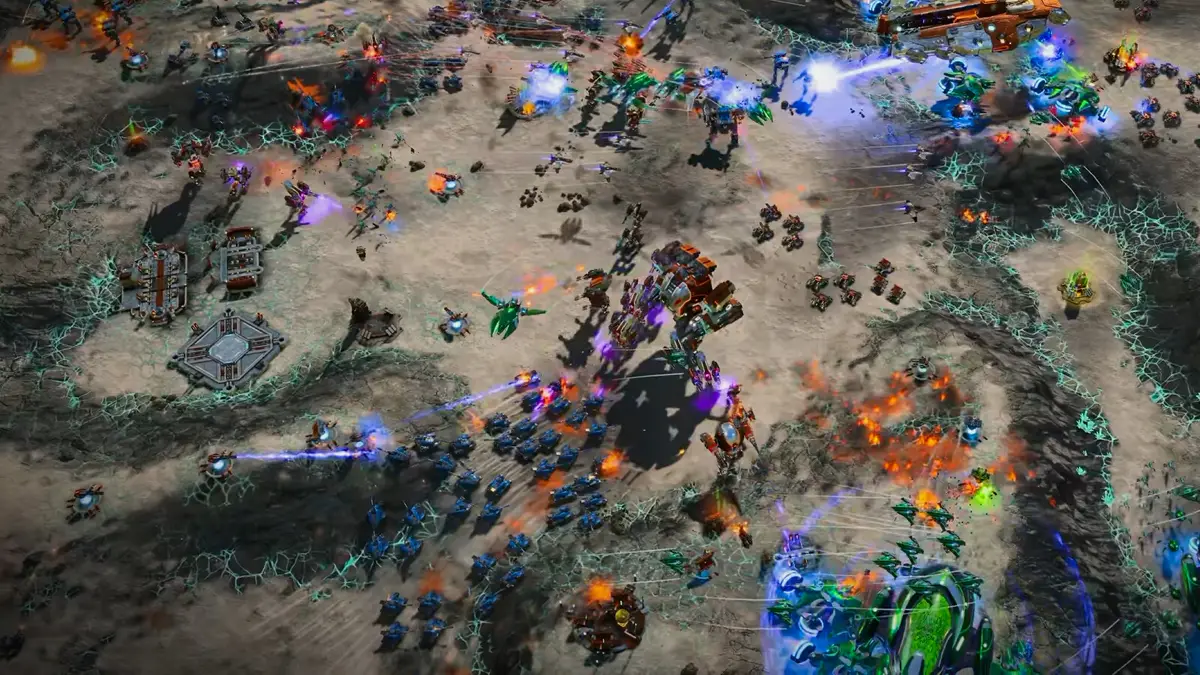
Ashes of the Singularity II Multiplayer Guide
Multiplayer in Ashes of the Singularity II: army composition, scouting, team roles, the 100-unit army cap and the launch balance issues to know.
Ashes of the Singularity II Maps Guide
The launch maps of Ashes of the Singularity II, from the small snow map Twin Lakes to the canyon map Scorched Divide, and how each shape changes your build.
Ashes of the Singularity II Beginner Guide: First 20 Minutes
A practical opening for Ashes of the Singularity II: first build, region capture, Power and Logistics, army control and the mistakes that lose games.
Ashes of the Singularity II Achievements Guide
The confirmed achievement data for Ashes of the Singularity II, the fastest completion routes and why 30 of the 35 achievements are rare.
Ashes of the Singularity II Ashfall Caldera Map Guide
How to play Ashfall Caldera in Ashes of the Singularity II: the trench chokepoints, the best factions and the openings that survive the funnel.
More Ashes of the Singularity II Guides
Ashes of the Singularity II Best Settings for Performance
A practical settings guide for Ashes of the Singularity II: resolution, presets, shadows, VSync and the Windows tweaks that help a CPU-bound RTS.
Ashes of the Singularity II Best Units Tier List
A launch tier list for Ashes of the Singularity II: the best units by role, the traps to avoid and the super units worth their logistics.
Ashes of the Singularity II Campaign Walkthrough
A spoiler-light walkthrough for the 10-mission Ashes of the Singularity II campaign: mission pacing, difficulty spikes, achievements and army tips.
Ashes of the Singularity II Factions Guide
How UEF, PHC and Substrate actually differ in Ashes of the Singularity II: rosters, economy, defense, air and which faction to pick first.
Ashes of the Singularity II Performance Guide
Why Ashes of the Singularity II drops frames in big battles, what the benchmarks show and the settings changes that actually help.
Ashes of the Singularity II PHC Build Order
A Post-Human Coalition opening for Ashes of the Singularity II: Factory units, the Forge transition and the first Champion timing.
Ashes of the Singularity II PHC Units and Stats
All 20 Post-Human Coalition units in Ashes of the Singularity II: stats, costs, aircraft, commanders and the upgrade path to Hyperion.
Ashes of the Singularity II Substrate Build Order
A Substrate opening for Ashes of the Singularity II: cheap Hatchlings, the Eradicator timing, Reaper trades and the first Punisher.